Boron nitride in high-temperature furnace construction
The demands placed on materials in high-temperature furnace construction are extremely high, as modern furnace systems are subjected to multiple stresses simultaneously. The materials used must not only withstand temperatures of up to 2200°C, but are also exposed to electrical voltages and aggressive atmospheres. In addition, thermal cycles place significant mechanical stress on the materials, and there is a certain risk of wetting, reactions, and contamination. That’s quite a lot to handle all at once!
Many traditional materials offer either good electrical insulation or high resistance to temperature and chemicals—but rarely both at the same time. Hexagonal boron nitride is different. This white graphite meets electrical, thermal, and chemical requirements simultaneously, making it ideal for applications in high-temperature furnace construction.
Typical applications:
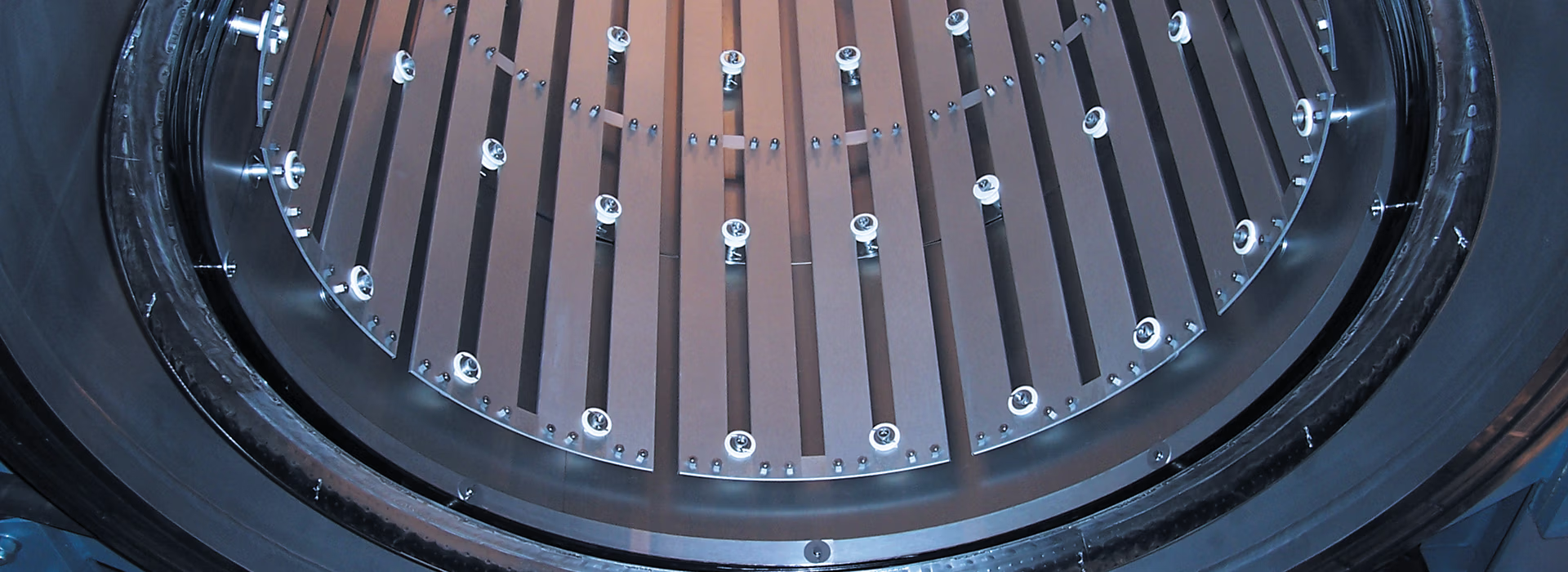
- Electrically insulating components inside the furnace, e.g., spacers between conductive components, support and guide elements, as well as protective tubes and sleeves, e.g., for thermocouples, measuring devices, and sensors
- Inert sintering and processing aids, e.g., crucibles, setters, and sintering supports
- Heat-conductive and thermal-shock-resistant components inside the oven, e.g., heating elements
Our Boron Nitride Recommendations
HeBoCoat ® PL-W 250
HeBoCoat ® PL-E 125
Advantages of Boron Nitride in High-Temperature Furnace Construction
- Electrical protection even at extreme temperatures
- Preventing undesirable reactions with melts, salts, or atmospheres
- Minimal contamination of sensitive materials and processes
- Long service life thanks to thermal stability and shock resistance
- Cost-effective manufacturing of high-precision components
- Maximizing the service life of high-quality substrates
Didn't find your application?
Our team is happy to assist you.



Frequently Asked Questions
What materials are used for components in high-temperature applications?
Components made from HeBoSint® are ideal for high-temperature applications. They are also used, for example, in the production of monocrystalline and polycrystalline silicon wafers for solar modules and thin-film modules.
Benefits of HeBoSint®
- excellent resistance to thermal cycling
- Excellent electrical insulation
- Ideal for use in vacuum or inert gas environments
Which specific boron nitride components are used in the construction of high-temperature furnaces?
Our solid HeBoSint® grades are the preferred choice for high-temperature furnace construction. Typical components include electrical insulation sleeves for heaters, heater supports, thermocouple protection tubes, as well as vacuum furnace supports and setter plates.
Up to what temperatures can boron nitride components be used in furnace construction?
In an inert (oxygen-free) or reducing atmosphere, boron nitride is extremely temperature-stable and can easily withstand temperatures of over 2,000 °C. This makes it the perfect solution for furnace applications and thermal processes where conventional materials reach their performance limits.
How does boron nitride help to protect sensitive measuring equipment inside the furnace?
Measuring elements such as thermocouples are subjected to extreme thermal and chemical stresses inside the furnace. By using boron nitride thermocouple protection tubes (HeBoSint®), these elements benefit from the material’s exceptional resistance to high temperatures and chemicals. The protection tubes withstand sudden temperature changes (thermal shocks) and reliably protect the sensitive measuring equipment from aggressive process environments.