Boron nitride in metal casting
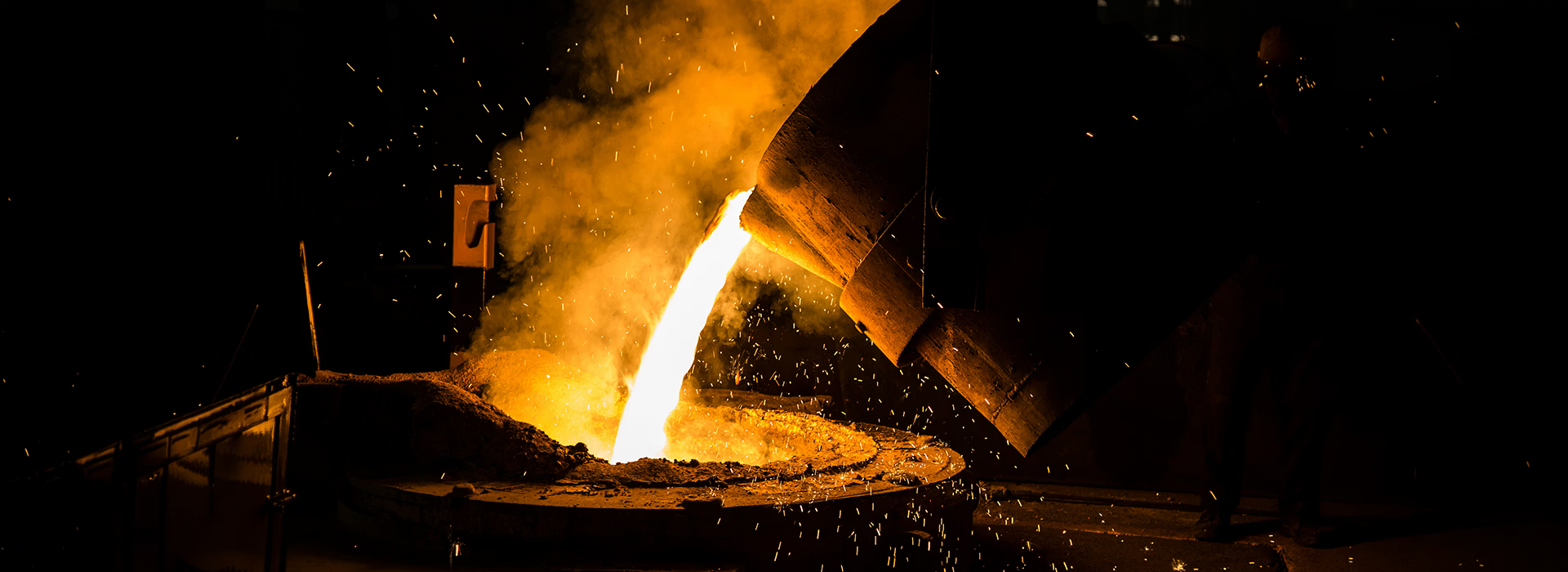
Hexagonal boron nitride is considered one of the most effective materials for separating molten metal from mold and tool surfaces.
The extreme conditions in metal casting often lead to metal adhesion and reactions between the metal and the mold material, as well as surface defects and material inclusions. All too often, this results in time-consuming rework and shortens the service life of tools. But that’s all over now!
Henze BNP’s HeBoCoat and HeBoSint products are thermally stable, chemically inert, and metal-repellent—even at temperatures above 1600 °C! This enables efficient, reproducible processes in metal casting.
The unique combination of excellent temperature resistance, chemical resistance, and low wettability makes Henze BNP products the perfect choice for metal casting.
Typical applications:
- The ideal process partner for iron, precious metal, and nickel alloys, among others
- Process-critical forming components, e.g., release rings, side dams, and nozzles
- Coatings for casting tools, casting channels, or molds
- Mold and core coatings in investment casting
- Protective and barrier layers on graphite or ceramic components
Our Boron Nitride Recommendations for Applications in Metal Casting
HeBoCoat ® PL-W 250
HeBoSint® SL-N 300 ceramic exhibits optimized wear resistance due to the addition of silicon-aluminum oxynitride. Components made from this material demonstrate their advantages precisely in applications where high mechanical stress and high wear resistance are critical.
Product Highlights
- Chemically and mechanically optimized wear behavior
- High compatibility with molten metals
- Maintaining the Purity of the Melt
- good release properties
- No wetting by most molten metals
- low material weight
HeBoCoat ® PL-E 125
HeBoCoat® PL-E 125* is an ethanol-based boron nitride coating containing an inorganic binder. The coating adheres very well even at high temperatures, both to metallic substrates and to glass, ceramics and graphite. Thanks to its ethanol-based formulation, the substrate surface is wetted exceptionally well, resulting in rapid drying. Furthermore, the use of pure boron nitride produces coatings with good anti-seize and lubricating properties, thereby reducing wear and contact reactions.
Typical areas of application
- Release agents for sintering, welding and brazing applications; anti-spatter
- Release agents and lubricants in glass processing
- Protection of graphite components during silicification
- Coating of crucibles, nozzles and plugs in the foundry sector
Product Highlights
- quick-drying
- Excellent separating, lubricating and protective properties, even at high temperatures
- good surface adhesion
- clean welds and solder joints
- High production output thanks to the extended service life of the plant
- greater cleanliness compared with conventional release agents
- dry lubricating film – no oils, greases or silicones
- maximum effect with economical dosing
- effective protection against metal splashes
* HeBoCoat Power Line – Ethanol BN-Content ⋅10
HeBoCoat ® PL-W 300
HeBoCoat® PL-W 300* is a water-based boron nitride coating with a solids content of 30 per cent. The boron nitride used is of high purity, has good crystallinity and a high degree of fineness, ensuring optimum surface coverage. An organic binder ensures good adhesion and good workability. Special additives improve wetting of the substrate surface and prevent rapid settling.
Typical areas of application
- Release agents for graphite in siliconisation processes
- Protection against carburisation in sintering and pressure sintering applications
- Release agents in coating processes
Product Highlights
- good surface adhesion
- optimal release and lubrication properties
- The coating is ready for use
* HeBoCoat Power Line – Wasser-BN-Gehalt ⋅10
Advantages of boron nitride in metal casting:
- Preventing the molten metal from sticking
- Ensuring dimensionally accurate shaping
- Extended service life by minimizing reactions and wear
- Preventing unplanned downtime through maximum thermal shock resistance
- Reduced maintenance requirements, improved process stability, and cost efficiency
- Consistent casting quality and maintenance of alloy purity
Didn't find your application?
Our team is happy to assist you.



Frequently Asked Questions
What are the advantages of boron nitride products in metal casting?
Metal casting is characterised by extremely high temperatures and constant contact with aggressive molten metals. Boron nitride is the ideal solution here, as it is extremely resistant to thermal shock and, at the same time, chemically resistant to many molten metals. The use of boron nitride products significantly extends the service life of the tools used and markedly improves process reliability in foundries.
Which specific components made of boron nitride are used in foundry technology?
Thanks to the excellent and easy machinability of solid boron nitride, an enormous variety of geometries can be realized exactly according to customer requirements. Our solid HeBoSint® materials are therefore preferred for the production of crucibles, nozzles and a wide variety of molded parts for metal casting .
How do boron nitride coatings support the casting process?
Our liquid HeBoCoat® coatings are essential in metal casting to provide the necessary release properties for mould materials and refractory materials. This non-stick effect reduces wear on plant components, makes subsequent cleaning considerably easier and thus improves the overall efficiency of the process.
Why is boron nitride so important, especially for aluminum casting?
Although aluminum is light and economical, in its liquid or plastic state it places extremely high demands on systems, tools and processing aids. The constantly increasing quality demands in aluminum casting require an absolutely reliable coating of the refractory materials used. HeBoCoat® products have exactly the right combination of properties needed to meet these high requirements in the long term.