FAQ
What is boron nitride?
- Extreme temperature resistance: In an inert (oxygen-free) or reducing environment, boron nitride can easily withstand temperatures exceeding 2,000 °C.
- Outstanding thermal management: It offers excellent thermal conductivity and high thermal capacity, combined with very low thermal expansion.
- Electrical insulation: The material has a low dielectric constant and excellent dielectric strength, making it ideal for electrical components.
- Thermal shock resistance: Boron nitride remains extremely stable under extreme and abrupt temperature changes.
- Excellent release and lubricating properties: It has a naturally very low coefficient of friction and provides reliable lubrication even under extreme conditions.
- Chemical resistance: It is chemically inert and can withstand even aggressive molten metals.
What is boron nitride used for?
Here is an overview of the most important industrial applications:
- Metal and aluminum casting: Crucibles, nozzles, and molded parts are made from solid boron nitride because the material is extremely resistant to thermal shock and does not chemically react with molten metal. When used as a coating on channels, it prevents buildup and makes cleaning easier.
- Powder metallurgy (metal atomization): Boron nitride nozzles ensure an extremely high powder yield, reduce waste, and enable precise control of particle shape and size.
- High-temperature furnace construction: It is used as a heat-resistant electrical insulation sleeve, heating element support, or thermocouple protection tube and ensures safe process control.
- Sintering technology: Used as a sintering support or coating, it reliably separates the sintered material from the substrate, prevents sticking, and protects components from unwanted carburization.
- Metal Forming & Extrusion: During drawing, rolling, or aluminum extrusion, boron nitride acts as a highly effective high-temperature release agent and lubricant, replacing traditional agents such as carbon black. It also ensures clean processes in superplastic forming (SPF).
- Welding, brazing, and laser processing: Coatings and sprays reliably protect workpieces and welding nozzles from metal spatter. In laser cutting, boron nitride reduces burr formation and protects against oxidation and soot marks.
- PVD and plasma systems: Metallic shielding frames are coated using these systems to save valuable cleaning time thanks to the non-stick effect and to ensure electrical insulation.
- Thermally Conductive Plastics (Thermal Management): Boron nitride powders are ideal fillers for significantly increasing the thermal conductivity of plastics (e.g., for electronics) without compromising their electrical insulation properties.
- Lubricants: As an oil additive, it minimizes wear and friction, thereby reducing energy and fuel consumption. It also serves as a future-proof alternative to PTFE and is partially NSF-certified (Category HX-1) for use in lubricants that may come into occasional contact with food.
- Aerospace: Boron nitride has proven its worth in plasma thrusters for satellites under the most extreme conditions. It provides electrical insulation (preventing short circuits), does not chemically react with the plasma, and withstands the extreme temperature variations in space.
- Solar and semiconductor technology: In the manufacture of silicon wafers for solar modules, it protects the sensitive graphite and copper heating elements. High-performance mixed ceramics (such as HeBoSint® SL-A 800) are used in state-of-the-art power and semiconductor electronics.
- Hydrogen economy: Boron nitride powder serves as a diffusion barrier to improve the sealing performance of materials used in hydrogen storage and transport and to minimize emissions.
In what forms does boron nitride come?
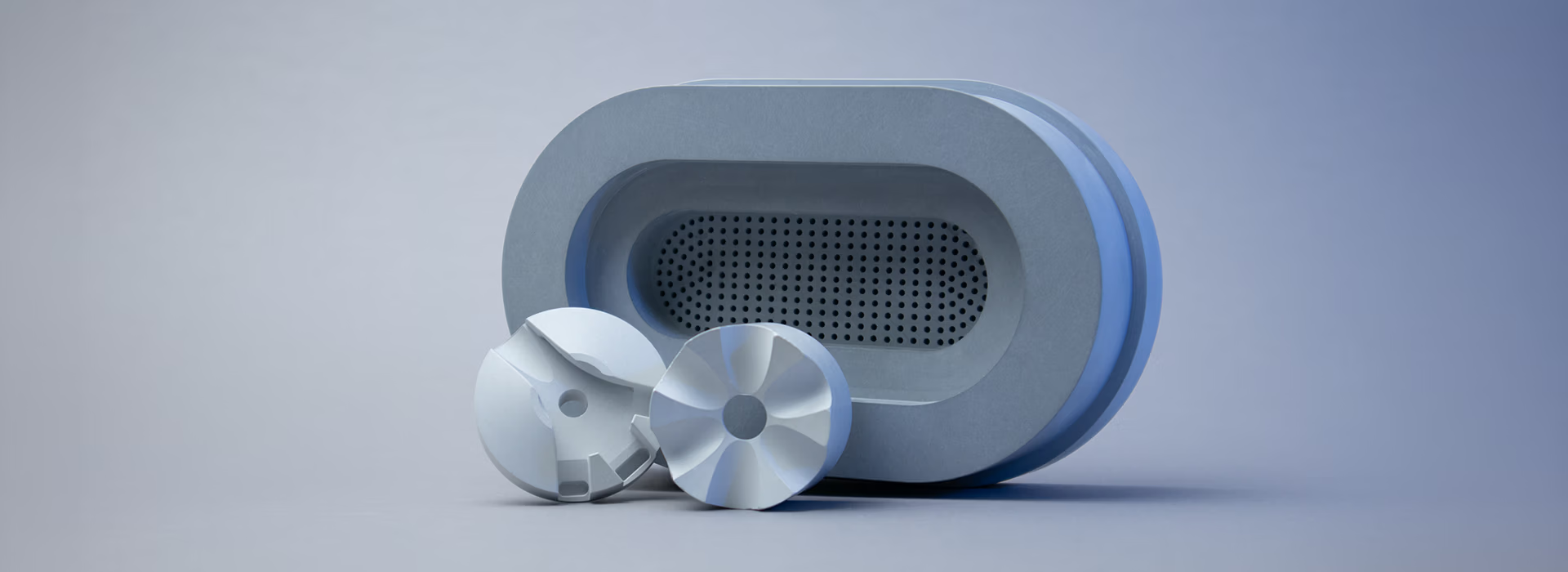
- Solid Form (Sintered Components): In its solid form, boron nitride is often referred to as “white graphite” due to its structure. The material is hot-pressed under high pressure and temperature into large blocks or billets, from which high-precision and complex components are subsequently manufactured. At Henze BNP, these thermally conductive and electrically insulating components are known under the HeBoSint® product family.
- Powder Form: Boron nitride powders are available in a wide range of grades and are primarily used as functional fillers. They are used, for example, to make plastics thermally conductive (thermal management) or as solid lubricants. These powder products are available from Henze under the brand name HeBoFill®.
- Liquid Form (Coatings / Suspensions): Boron nitride is used as a water- or solvent-based liquid suspension to apply or coat surfaces. This provides excellent release and lubrication properties, e.g., in metal casting. These coatings are part of the HeBoCoat® product family.
- Aerosol form (sprays): For particularly easy, quick, and precise application, boron nitride is also available as a spray. This is ideal for pressure sintering on small surfaces or for protecting welding and brazing fixtures. At Henze, sprays are also part of the HeBoCoat® product group (Spray Line).
- Lubricant additive (oil dispersion): In this form, ultra-fine boron nitride particles are present in a highly concentrated and finely dispersed state within an oil. When used as an additive in conventional lubricants, it has been proven to minimize friction and wear in engines and transmissions. This liquid additive is marketed under the name HeBoLub®.
What is the difference between cubic and hexagonal boron nitride?
- Cubic boron nitride: This form has a crystal structure similar to that of diamond and, as a result, exhibits similar properties. The most important characteristic of cubic boron nitride is its extreme hardness, which is why it is often used as a substitute for diamond in industrial applications.
- Hexagonal boron nitride: Unlike the cubic form, hexagonal boron nitride is relatively soft. It is readily available commercially and can be processed into large blocks (ingots) in its solid form. Its outstanding strengths lie not in its hardness, but in its ability to withstand extremely high temperatures, its excellent electrical properties, and its resistance to aggressive molten metals.
How does boron nitride differ from conventional graphite?
- Excellent electrical insulation: While conventional graphite is electrically conductive, boron nitride is an excellent electrical insulator. This property makes it indispensable for applications in which components must simultaneously dissipate heat efficiently and provide reliable electrical insulation (such as in semiconductor technology or high-temperature furnace construction).
- Significantly higher oxidation temperature: Unlike graphite, boron nitride has a much higher oxidation temperature. This means that it does not burn upon contact with oxygen until much higher temperatures are reached, making it significantly more resistant and stable in thermally extreme environments.
Can boron nitride also be used in the food industry?
- Lubricants for food processing: Certain boron nitride powders from Henze BNP (such as HeBoFill® LL-SP 010 and HeBoFill® LL-SP 050) are NSF-certified (Category HX-1). These powders may be used as additives in lubricants where incidental contact with food may occur. This allows their use directly in and around food processing production facilities. In addition, boron nitride lubricants have received the necessary FDA and EU approvals for food contact.
- Lebensmittelverpackungen: Bornitrid wird zudem als funktionaler Füllstoff für Polyolefin-Folienblasen genutzt, welche bei Lebensmittelanwendungen zum Einsatz kommen.
What are the benefits of NSF-certified powders in food technology?
- Sicherheit bei unbeabsichtigtem Lebensmittelkontakt (Kategorie HX-1): Die Pulver besitzen das NSF-Zertifikat in der Kategorie HX-1. Dadurch dürfen sie offiziell als Additive in Schmierstoffen eingesetzt werden, bei denen ein gelegentlicher, unbeabsichtigter Kontakt mit Lebensmitteln auftreten kann, was ihren Einsatz direkt in und an Anlagen der Lebensmittelverarbeitung ermöglicht.
- Physiological safety and expanded approvals: The material is physiologically safe and extremely compatible with seals as well as the plastics commonly used in systems. In addition to NSF certification, the material also holds the necessary FDA and EU approvals for food contact.
- A safe alternative to PTFE with superior lubricating performance: These powders serve as a future-proof alternative to PTFE. They form a stable dry lubricating film that remains intact even under the heaviest loads and in extreme conditions. They also exhibit excellent creep and wetting properties.
- Equipment protection and cost-effectiveness: As lubricant additives, they have been proven to reduce friction, which leads to lower energy consumption in production facilities. The strong wear protection they provide on surfaces also significantly extends the service life (product lifecycle) of components and machinery.
- Versatility right down to the packaging: In addition to their traditional use as lubricants, these fillers can also be used in polyolefin film blowing, which is directly applied to food applications and packaging.
Why should I choose boron nitride products from Henze BNP?
As a family business, we have specialized exclusively in the production, distribution and development of hexagonal boron nitride products for more than 30 years. We are characterized by in-depth expertise, a high level of innovation and individual customer advice. This enables us to provide you with tailor-made solutions for the most technically demanding applications from a single source – from the initial idea to the finished product.
Does Henze BNP stand for "Made in Germany" quality?
Yes, absolutely. We manufacture our boron nitride products directly at our company site in Lauben (southern Bavaria). Our quality and environmental management is strictly and reliably certified in accordance with ISO 9001 (since 2002) and ISO 14001 (since 2019).
How sustainably are Henze BNP's products manufactured?
Sustainability is deeply rooted in our DNA. Thanks to our in-house photovoltaic systems, we achieve a self-sufficiency rate of just over 60% during the summer months. The remaining electricity we need is sourced entirely from renewable sources. Thanks to a sophisticated energy recovery concept, we manufacture our boron nitride sintered bodies using 100% renewable energy—and, in the best-case scenario, 40% more energy-efficiently compared to conventional manufacturing processes. In addition, we cover a large portion of our heating needs in an environmentally friendly manner through the recovery of process heat.
What ethical principles does Henze BNP adhere to?
We take responsibility for people and the environment. Since 2024, we have been successfully certified as a company according to the strict criteria of the Economy for the Common Good (ECG). Our ethical business culture also means that we consciously refrain from working with companies from the nuclear energy sector (extraction of uranium or production of nuclear energy) and the arms and weapons industry when selling our products.
Are the products cost-effective and safe to use?
Yes, for example, our products reduce energy and fuel consumption by reducing friction and extend the product life cycle through optimum wear protection. In addition, boron nitride is physiologically harmless, very compatible with plastics and seals and retains its effect even under the most extreme conditions. Certain HeBoFill® powders are even NSF-certified (category HX-1) for use in lubricants with unintended food contact.
Why sintered boron nitride crucibles?
Thanks to their high temperature resistance and non-wettability, Henze HeBoSint® crucibles are particularly suitable as a crucible material.
HeBoSint® Benefits
- Excellent resistance to thermal cycling
- low thermal expansion
- high thermal conductivity even at high temperatures
- good release properties
- No wetting by most molten metals
- easy to clean
Why nozzles made of sintered boron nitride?
During welding and soldering, for example, spatter usually occurs between the nozzle and the nozzle holder, which can cause a short circuit – a disruptive effect that can be avoided by using HeBoSint® nozzles.
Benefits at a Glance
- excellent resistance to thermal cycling
- Excellent electrical insulation
- good release properties
- No wetting by most molten metals
- easy to clean
Why use insulating bushings made of sintered boron nitride?
Ideally suited for high-temperature furnace construction, HeBoSint® is able to withstand the extreme demands placed on it thanks to its outstanding thermal shock resistance and insulating properties.
Benefits at a Glance
- excellent resistance to thermal cycling
- Excellent electrical insulation
- Ideal for use in vacuum or inert gas environments
Why sintered boron nitride rings and strips?
HeBoSint® shielding frames and strips enhance the productivity, safety, and durability of PVD and plasma systems. In addition, they reliably contain the arcs within the correct boundaries. Henze’s highly qualified staff manufactures target frames and holders, bushings, protective tubes, and linings precisely according to your specifications.
Benefits at a glance
- excellent resistance to thermal cycling
- Excellent electrical insulation
- good release properties
- easy to clean
What materials are used for components in high-temperature applications?
Components made from HeBoSint® are ideal for high-temperature applications. They are also used, for example, in the production of monocrystalline and polycrystalline silicon wafers for solar modules and thin-film modules.
Benefits of HeBoSint®
- excellent resistance to thermal cycling
- Excellent electrical insulation
- Ideal for use in vacuum or inert gas environments
Why use a sintered boron nitride soldering pad?
Dripping solder can compromise the soldering result, as it tends to stick to soldering pads and fixtures during dip or vacuum soldering. A soldering pad made of HeBoSint® provides a solution to this problem.
Benefits at a Glance
- Excellent resistance to thermal cycling
- Excellent electrical insulation
- good release properties
- No wetting by most molten metals
- easy to clean
Why components with a wall thickness of up to 30 mm
Ideal e.g. for high-temperature applications where a thicker wall thickness is required. Wall thicknesses of up to 30 mm considerably increase the flexibility of component geometries. The pure white color is retained even under extreme conditions.
Advantages
- excellent resistance to thermal cycling
- Excellent electrical insulation
- Component wall thicknesses up to 30 mm
- white color
Why composite materials made of boron nitride and zirconia?
Thanks to the addition of zirconium oxide, HeBoSint® components are ideal for use when high mechanical stress and high wear resistance are required.
Advantages
- excellent wear resistance
- good release properties
- No wetting by most molten metals
- good machinability
What is HeBoCoat and how does it work?
HeBoCoat comprises liquid boron nitride coatings that are available on a water or solvent basis. They are applied to surfaces and provide an optimum release and lubrication effect in a wide range of applications.
In which industrial applications is HeBoCoat typically used?
What advantages does HeBoCoat offer in sintering technology?
In sintering processes, HeBoCoat® coatings—applied, for example, to graphite sintering carriers—reliably prevent carburization of the components and ensure that the sintered material separates cleanly from the substrate. For pressure sintering on small surfaces, special HeBoCoat® sprays are also available, which provide the necessary release effect quickly and precisely.
How does HeBoCoat help with welding, brazing, and laser processing?
HeBoCoat® sprays and suspensions reliably protect workpieces, system components and welding protection devices against the unwanted adhesion of welding and soldering spatter. This saves time and significantly increases the service life of welding nozzles and soldering tips. In laser processing, the extremely temperature-stable boron nitride layer acts as protection against atmospheric oxygen and smoke marks, prevents metal spatter from sticking and reduces burr formation during laser cutting.
What is HeBoFill® and what is its main function?
HeBoFill® is our versatile product family of boron nitride powders. We offer a wide range of these products, which are primarily used as fillers to significantly increase the thermal conductivity of plastics. What makes them special is that the plastics’ excellent electrical insulation properties are fully preserved, making them ideal for thermal management applications, such as in the electronics industry.
In which industrial production processes is HeBoFill® used?
The applications are extremely diverse. In aluminum extrusion, special HeBoFill® powders replace traditional release agents such as carbon black and ensure optimal lubrication between the aluminum billet and the extrusion die at high temperatures. In metal forming (such as drawing, rolling, or pressing), they also function as highly effective release and lubricating agents that cause neither carburization nor short circuits or contamination.
Can HeBoFill® be used as an alternative to PTFE (PFAS)?
Yes, absolutely! HeBoFill® is a future-proof and high-performance alternative to PTFE, especially in view of the impending PFAS ban. It is physiologically harmless and retains its effect even under the most extreme conditions. In addition, our HeBoFill® LL-SP 010 and LL-SP 050 powders are NSF-certified (category HX-1) and may be used in lubricants with unintended food contact.
Does HeBoFill® play a role in the modern hydrogen economy?
Yes. The storage and transport of molecular hydrogen (H2) require extremely high sealing performance. HeBoFill® can be used here as a diffusion barrier to enhance the barrier properties of the materials used and minimize hydrogen emissions.
What exactly is HeBoLub®?
HeBoLub® is an innovative and high-performance lubricant additive for engines, transmissions, and equipment. It consists of fine boron nitride particles dispersed in oil at a high concentration. When used as an additive in conventional lubricants, it demonstrably minimizes friction and wear.
What are the specific benefits of HeBoLub® for machines and engines?
HeBoLub® significantly reduces fuel and energy consumption by reducing friction. It also extends the life cycle of products and engines thanks to the excellent wear protection of the surfaces. A major advantage is that the boron nitride is immediately in position to lubricate the engine from a cold start – in contrast to pure engine oil, which first needs time to spread.
How does HeBoLub® behave under high loads and extreme temperatures?
Thanks to the special properties of boron nitride, HeBoLub® significantly improves the high-temperature and emergency running properties of lubricants and increases their thermal conductivity. Due to the dry lubricating film that forms, the lubricity is maintained even under constantly high loads.
Does HeBoLub® damage sensitive components such as gaskets?
No. HeBoLub® is physiologically safe and highly compatible with seals and plastic materials. It also offers excellent creep and wetting properties, ensuring optimal distribution of the lubricant.
In which applications is the thermal shock resistance of boron nitride particularly important?
The outstanding thermal shock resistance is in demand across all industries, but particularly in metal casting and high-temperature furnace construction. In metal casting, it is used to produce durable crucibles, nozzles and molded parts that significantly increase the service life of tools and process reliability. In furnace construction, the material ensures reliability in the form of electrical insulation sleeves, heater supports or thermocouple protection tubes despite constant temperature changes..
How do Henze BNP boron nitride products perform under extreme temperature fluctuations?
Boron nitride products, especially our HeBoSint® materials, are inherently highly resistant to thermal shock. They can easily withstand sudden and extreme temperature changes without losing their structural integrity. This ensures efficient and absolutely safe process control, even when things get hot.
What causes high thermal shock stress in industrial processes?
Extreme temperature fluctuations are an inevitable part of nearly all high-temperature processes. Plant components and tools are usually heated up very quickly—often due to sudden contact with extremely hot media such as molten metal—and then cool down rapidly. These abrupt fluctuations place enormous stress on conventional materials and can lead to cracks or component failure.
Why is chemical resistance a critical success factor in high-temperature industrial processes?
In many industries—such as metallurgy, sintering, the glass industry, and the energy and battery sectors—materials are subjected to extreme stress. They are constantly exposed to aggressive media, hot molten metals, process gases, or reactive residues. If a material cannot withstand these stresses and is corroded, this inevitably jeopardizes the stability of the entire process and drastically reduces the service life of the plant components.
How do boron nitride products from Henze BNP behave towards aggressive substances?
Boron nitride is characterized by the fact that it is largely chemically inert. Our HeBoSint® components, such as melting pots or nozzles, are chemically resistant to many molten metals and can even withstand aggressive alloy components with ease. Just how extreme this stability is can also be seen in the aerospace industry: even in the aggressive environments of plasma drives for satellites, the material remains stable and does not react with the drive plasma..
Why are the requirements for thermal conductivity in industry constantly increasing?
Increasing power densities, increasingly compact designs, and higher process temperatures place enormous demands on thermal management in virtually all industrial sectors. In high-temperature and energy applications, there is often the seemingly contradictory challenge that components must dissipate heat highly efficiently while simultaneously providing essential electrical insulation. Conventional materials reach their limits here, whereas boron nitride combines precisely these versatile properties.
Effectively dissipate heat while ensuring electrical insulation.
By nature, plastics do not have any significant thermal conductivity, although their use is increasing massively, particularly in the electronics sector. To solve this problem, we offer our HeBoFill® boron nitride powders. They are ideally suited as fillers to significantly increase the thermal conductivity of plastics while fully retaining their excellent electrical insulating properties. A major advantage for production: due to the low hardness of boron nitride, there is no tool wear during incorporation into the plastic and therefore no disruptive metal abrasion.
Which specific boron nitride materials offer maximum thermal conductivity for high-tech applications?
For components with extreme heat dissipation requirements, we have developed special high-performance mixed ceramics such as HeBoSint® SL-A 800. This material, based on aluminum nitride and boron nitride, impresses with its outstanding thermal conductivity of 115 W/mK and excellent electrical insulation. It is an ideal and cost-effective solution for state-of-the-art applications in semiconductor technology, power electronics, X-ray technology and aerospace.
Why is the combination of electrical insulation and thermal conductivity often a challenge in industry?
In many high-temperature and energy applications, there is a seemingly contradictory requirement: components must provide reliable electrical insulation while simultaneously dissipating heat efficiently and withstanding extremely high temperatures. Conventional materials quickly reach their limits in this regard. Boron nitride, on the other hand, is a high-temperature-resistant industrial ceramic that combines precisely these versatile properties.
In which industrial applications is electrical insulation using boron nitride particularly important?
Boron nitride is used wherever maximum precision is required under extreme conditions. Typical examples include high-temperature furnace construction, where HeBoSint® materials are used as electrical insulation sleeves for heaters. In solar technology (photovoltaics), electrically insulating boron nitride ceramics protect the sensitive graphite or copper heating elements in the production of silicon wafers. Even in space, for example in plasma drives for satellites, the electrical insulation provided by boron nitride prevents short circuits and ensures a constant electrical field. It is also the proven material in PVD systems, where it ideally combines insulation, temperature resistance and non-stick properties.
How can plastics be made thermally conductive without losing their electrical insulation properties?
As plastics naturally have no significant thermal conductivity, but their use in the electronics sector, for example, is constantly increasing, intelligent thermal management is required. Our HeBoFill® boron nitride powders are ideally suited as fillers to significantly increase the thermal conductivity of plastics while fully retaining their excellent electrical insulating properties. For solid components with even more extreme requirements, we also offer the high-performance mixed ceramic HeBoSint® SL-A 800, which combines outstanding thermal conductivity with excellent electrical insulation properties (specific electrical resistance >10^15 Ohm).
What role does temperature resistance play in material selection?
The selection of the right technical ceramic usually begins with a central question: Will the material and its properties withstand the demanding process conditions in the long term?? In many industries, conventional materials quickly reach their performance limits at high temperatures. Boron nitride, on the other hand, is an industrial ceramic that is naturally resistant to high temperatures and is a true all-rounder that reliably retains its unique properties – such as separating effect, insulation and thermal conductivity – even under extreme thermal loads.
How do Henze BNP boron nitride products withstand extreme temperatures?
Boron nitride is extremely temperature-stable. In an inert (oxygen-free) atmosphere, for example, the material remains stable up to 2,000 °C. Our sintered components (HeBoSint®) can withstand extremely high thermal loads – we manufacture our sintered bodies in our own hot presses even at maximum temperatures of up to 2,200 °C. But it’s not just solid components that benefit: our HeBoFill® powders and HeBoLub® lubricant additives also retain their excellent lubricating and separating effect even at the highest temperatures..
In which industrial applications is this extreme temperature resistance essential?
The thermal stability of our products is in demand in countless high-temperature applications. In high-temperature furnace construction, they guarantee safe process control as heat-resistant insulation sleeves and heater supports. In laser processing, an extremely temperature-stable boron nitride layer protects components from hot metal splashes and oxidation.. A particularly impressive example of the resistance of boron nitride is the aerospace industry: in plasma drives for satellites, the material proves its ability not only to dissipate extreme heat effectively, but also to withstand the extreme low temperatures in space without any problems.
Why do unwanted deposits often form in industrial processes?
Whenever high temperatures, pressure, or molten materials come into contact with tools and components during the processing of metals, glass, or ceramic materials, unwanted deposits frequently form. These can disrupt the process, cause tool wear, and result in extremely labor-intensive cleaning tasks.
How do boron nitride products from Henze BNP prevent materials from sticking?
Boron nitride is a true all-rounder and has an excellent release and lubricating effect by nature. The use of sintered HeBoSint® components, HeBoFill® powders or liquid HeBoCoat® coatings creates an extremely temperature-resistant non-stick effect on the surfaces. This layer is chemically inert and reliably prevents process media or hot metal splashes from sticking to the components.
In which specific applications is the non-stick and release effect of boron nitride particularly in demand?
- Sintering technology: HeBoSint® substrates and HeBoCoat® coatings reliably prevent the sintered material from sticking to the substrate.
- Welding, soldering, and laser processing: These coatings protect welding nozzles, soldering tips, and workpieces from unwanted adhesion of welding spatter, solder spatter, and metal spatter. In laser processing, they also reduce burr formation, as molten residue can flow away more easily.
- Metal Casting & PVD Systems: HeBoCoat® provides the necessary release effect for channel materials in casting and makes cleaning easier. The non-stick effect also makes it significantly easier to clean metal shielding frames in PVD and plasma systems, saving valuable process time.
Which specific applications benefit most from this chemical stability?
Chemical resistance is particularly indispensable in metal and aluminum casting as well as in powder metallurgy (metal atomization), as it ensures the longevity of tools and nozzles even during high-volume casting. In high-temperature furnace construction, its chemically inert behavior ensures safe and efficient process control. This property is also essential in laser processing: Because boron nitride is extremely temperature-stable and chemically inert, it reliably prevents hot metal splashes from adhering to the component.
*** Translated with www.DeepL.com/Translator (free version) ***
Which specific boron nitride components are used in the construction of high-temperature furnaces?
Our solid HeBoSint® grades are the preferred choice for high-temperature furnace construction. Typical components include electrical insulation sleeves for heaters, heater supports, thermocouple protection tubes, as well as vacuum furnace supports and setter plates.
Up to what temperatures can boron nitride components be used in furnace construction?
In an inert (oxygen-free) or reducing atmosphere, boron nitride is extremely temperature-stable and can easily withstand temperatures of over 2,000 °C. This makes it the perfect solution for furnace applications and thermal processes where conventional materials reach their performance limits.
How does boron nitride help to protect sensitive measuring equipment inside the furnace?
Measuring elements such as thermocouples are subjected to extreme thermal and chemical stresses inside the furnace. By using boron nitride thermocouple protection tubes (HeBoSint®), these elements benefit from the material’s exceptional resistance to high temperatures and chemicals. The protection tubes withstand sudden temperature changes (thermal shocks) and reliably protect the sensitive measuring equipment from aggressive process environments.
What are the advantages of boron nitride products in metal casting?
Metal casting is characterised by extremely high temperatures and constant contact with aggressive molten metals. Boron nitride is the ideal solution here, as it is extremely resistant to thermal shock and, at the same time, chemically resistant to many molten metals. The use of boron nitride products significantly extends the service life of the tools used and markedly improves process reliability in foundries.
Which specific components made of boron nitride are used in foundry technology?
Thanks to the excellent and easy machinability of solid boron nitride, an enormous variety of geometries can be realized exactly according to customer requirements. Our solid HeBoSint® materials are therefore preferred for the production of crucibles, nozzles and a wide variety of molded parts for metal casting .
How do boron nitride coatings support the casting process?
Our liquid HeBoCoat® coatings are essential in metal casting to provide the necessary release properties for mould materials and refractory materials. This non-stick effect reduces wear on plant components, makes subsequent cleaning considerably easier and thus improves the overall efficiency of the process.
Why is boron nitride so important, especially for aluminum casting?
Although aluminum is light and economical, in its liquid or plastic state it places extremely high demands on systems, tools and processing aids. The constantly increasing quality demands in aluminum casting require an absolutely reliable coating of the refractory materials used. HeBoCoat® products have exactly the right combination of properties needed to meet these high requirements in the long term.
Why is boron nitride an ideal material for sintering technology?
Sintering processes take place at extremely high temperatures and usually in a protected atmosphere. Boron nitride is ideal for these harsh conditions as it combines high precision, clean processes and a long service life for the sintering and processing aids used. It is extremely temperature-resistant and chemically stable, thus ensuring the efficiency and quality of the entire process chain..
How do boron nitride products protect sintered materials from caking and carburisation?
To ensure reliable release in the sintering furnace, bespoke solutions are available: on the one hand, sintering supports (setter plates) can be manufactured directly from solid HeBoSint® materials, which inherently prevent the sintered material from sticking and avoid unwanted carburisation of the components. Alternatively, existing graphite charge carriers can be coated with liquid HeBoCoat® coatings, which also reliably separate the sintered material from the base and protect it from carburisation.
What solutions does Henze BNP offer specifically for pressure sintering and powder metallurgy?
When pressure sintering, especially on smaller surfaces, our HeBoCoat® sprays (aerosols) are ideal for creating the necessary release effect quickly and easily. In powder metallurgy – for example in metal atomization – durable nozzles made of solid HeBoSint® (such as our high-performance ceramic SL-N 300) are also used. These guarantee a high degree of purity of the metal powder, significantly reduce waste and allow the shape and particle size distribution of the powder to be precisely controlled.
Why is boron nitride an ideal material for powder metallurgy?
In powder metallurgy and especially in metal atomization, work is often carried out at high temperatures, in complex atmospheres and with sensitive material systems. Boron nitride is the ideal solution for these harsh conditions, as it is extremely chemically resistant to aggressive alloy components and can even be used without extensive preheating. This ensures an excellent service life for the nozzles, even with very large casting quantities.
How do boron nitride nozzles improve the quality of the metal powder produced?
The use of special high-performance ceramics such as HeBoSint® SL-N 300 guarantees that the metal powder produced is of extremely high purity. A key technological advantage of these nozzles is that both the particle shape and the particle size distribution (PSD) can be precisely controlled and influenced during atomisation. This reliably ensures consistent, top-quality results in every single batch.
What are the economic benefits of using HeBoSint® SL-N 300 in metal atomisation?
To operate the metal atomisation process profitably and efficiently, the energy used must be utilised optimally, powder yield maximised and waste minimised. This is precisely where HeBoSint® SL-N 300 comes into its own: the nozzles enable maximum powder yields, drastically reduce unwanted waste and help to avoid long and costly downtimes or maintenance periods. Overall, this leads to significantly reduced process costs.
Why is boron nitride a key material for Superplastic Forming (SPF)?
In superplastic forming, metals (such as aluminum) are deformed under high temperatures. Boron nitride is regarded as an absolute key material in these demanding conditions, as it enables particularly precise and clean forming processes. Thanks to the special material properties of boron nitride, unwanted carburization, short circuits and disruptive contamination on the workpieces are reliably prevented during forming.
Which boron nitride products are used in superplastic forming?
Our liquid HeBoCoat® coatings and HeBoFill® powders are primarily used for forming processes such as SPF. The HeBoCoat® coatings in particular serve as highly effective mold release agents directly in Super Plastic Forming. They can be optimally applied to the forming tools and thus ensure reliable release.
What specific advantages do these coatings and powders offer in metal forming?
Our boron nitride products act as highly effective release agents and lubricants that remain stable even at the high temperatures encountered in forming processes (such as drawing, rolling or pressing). They create a reliable release layer between the tool and the component. This not only enables very clean working, but also ensures the quality of the formed parts, as adhesion and process-related contamination are consistently prevented.
*** Translated with www.DeepL.com/Translator (free version) ***
Why are the requirements for tools and processing aids in the aluminum industry so extreme?
As a material, aluminum is light, versatile and extremely economical, which is why it is valued in many industries. However, in its liquid or plastic state, the metal places extremely high demands on the equipment, tools and process aids used. In order to meet the ever-increasing quality requirements in aluminum casting and forming, high-temperature-resistant materials are needed that can withstand these harsh conditions permanently and reliably.
How do boron nitride coatings improve aluminium casting?
When in contact with molten aluminium, it is essential that the refractory materials used are coated with a completely reliable coating. Our liquid HeBoCoat® coatings possess precisely the combination of properties required to meet these high quality standards on a long-term basis. For example, they provide channel materials with the necessary release properties, reduce wear on the equipment and make cleaning after casting considerably easier, which makes the overall process significantly more efficient.
What are the advantages of boron nitride powder in aluminium extrusion?
In extrusion, our special HeBoFill® boron nitride powders replace traditional release agents such as carbon black. Even at very high temperatures, they ensure an optimal lubricating effect between the aluminium billet and the extrusion die. In addition, liquid boron nitride release agents ensure ideal metal flow in the die, resulting in particularly precise, smooth and clean forming processes.
Why is boron nitride a proven material for PVD and plasma systems?
In PVD (physical vapor deposition) and plasma systems, the components are subject to extreme stresses. Boron nitride is the ideal material for this environment as it offers a perfect combination of extreme temperature resistance, excellent electrical insulation and a unique non-stick effect. As a result, it can withstand the harsh process conditions and constraints in plasma chambers permanently and safely.
Which specific boron nitride components are used in these systems?
Our solid HeBoSint® materials are the preferred choice for manufacturing components that are subjected to particularly high stresses. Typical components include shielding frames and strips for targets, covers, rails, protective tubes, as well as insulators and complete linings for plasma chambers. These sintered precision components offer high electrical breakdown strength under extreme heat and are particularly easy to clean due to the material’s specific separation behaviour.
What are the economic benefits of boron nitride coatings in PVD processes?
Metal shielding frames and fixtures in PVD systems tend to become heavily contaminated during the coating process. To prevent this, they are treated with our liquid HeBoCoat® coatings (or plasma coatings), creating a highly effective non-stick and release layer. This makes subsequent cleaning of the frames much easier, reducing maintenance requirements and saving valuable process time.
Why is boron nitride needed in the manufacture of solar modules?
Heating elements made of graphite or copper are used in the production of silicon wafers, which form the core of modern solar modules. These sensitive components are exposed to extreme thermal loads during the production process and must be protected by reliable electrically insulating ceramics. Boron nitride is the ideal material for this, as it has precisely these protective properties.
Which Henze BNP products are used in the photovoltaic sector?
For demanding insulation applications in solar and semiconductor technology, we manufacture precision components from our sintered HeBoSint® materials. These serve as essential protective components and insulators for sensitive heating elements, thereby ensuring a safe and trouble-free manufacturing process.
What properties make HeBoSint® the best solution for wafer production?
Photovoltaics require excellent thermal management combined with outstanding electrical insulation. HeBoSint® components combine precisely these seemingly contradictory properties: they provide excellent electrical insulation and withstand the enormous temperatures during silicon wafer production over the long term, making them often the best and safest solution for this application.
What are the common challenges in industrial welding and brazing?
During industrial welding, welding spatter very often accumulates on welding nozzles, workpieces, system components and protective devices. These hard deposits severely impair the functionality of the systems, as they hinder the gas flow and wire feed, for example. An exactly comparable problem caused by unwanted spatter build-up also arises in soldering technology.
How do boron nitride products prevent these unwanted deposits?
Boron nitride is extremely temperature-stable, chemically inert and acts naturally as a highly effective barrier layer. Through the targeted use of liquid HeBoCoat® sprays and suspensions, vulnerable surfaces are reliably protected against the adhesion of welding and solder spatter. Furthermore, components made of solid boron nitride (such as special sintered grades) are used directly as welding nozzles, soldering pads or mounts for induction heating coils due to their heat resistance.
What specific advantages does the use of boron nitride offer in welding and brazing?
The use of HeBoCoat® coatings saves valuable working time and costs, as it eliminates the need for time-consuming rework and the laborious removal of adhering spatter. Furthermore, the protective film significantly extends the service life of expensive welding nozzles and soldering tips. These properties also offer benefits in related fields such as laser processing: here, the boron nitride layer provides additional protection against oxidation and soot marks, and reduces burr formation, as molten residues can flow away much more easily thanks to the non-stick effect.
Why is boron nitride used in forming technology?
Highly effective release agents and lubricants are essential for demanding forming processes such as drawing, rolling or pressing metals. Boron nitride is ideal for these conditions as it retains its excellent lubricating and separating effect even at extreme process temperatures and under high pressure, thus ensuring smooth, safe processes.
Which boron nitride products from Henze BNP are suitable for forming processes?
Our liquid coatings are primarily used in industrial forming technology. HeBoCoat® coatings and our special HeBoFill® powder are used. These products can be optimally applied and create an extremely stable layer between the tool and the component to be machined as an effective release agent and lubricant.
What specific advantages does the use of boron nitride offer in drawing, rolling and pressing?
The use of HeBoCoat® and HeBoFill® not only ensures optimum lubrication and metal flow, but also protects the process from typical disruptive factors. Thanks to the special material properties of boron nitride, these process aids do not cause unwanted carburisation, short circuits or disruptive contamination during forming. This protects the tools, ensures high-quality workpieces and enables particularly clean working conditions.
What solutions does Henze BNP offer specifically for pressure sintering and powder metallurgy?
For pressure sintering, particularly on smaller surfaces, our HeBoCoat® sprays (aerosols) are ideal for quickly and easily achieving the required release effect. In powder metallurgy – for example, in metal atomisation – durable nozzles made from solid HeBoSint® (such as our high-performance ceramic SL-N 300) are also used. These guarantee a high purity of the metal powder, significantly reduce waste and enable the shape and particle size distribution of the powder to be precisely controlled.
What are the characteristics of a machinable technical ceramic such as boron nitride?
Technical ceramics such as boron nitride are advanced synthetic materials which, particularly in their sintered, solid form, are characterised by excellent and easy machinability. The material, often referred to as ‘white graphite’ due to its microstructure, can be shaped into highly complex geometries and to extremely tight tolerances in virtually any desired form. A key economic and technical advantage of this machinable ceramic is that the dense material is ready for use immediately, meaning that no additional heat treatment or further firing is required after mechanical machining. This property allows for an enormous variety of geometries in production.
What properties make boron nitride a particularly sought-after technical ceramic for industrial applications?
As an engineering ceramic, boron nitride is a truly versatile material that combines seemingly contradictory physical properties in a single substance. In addition to its outstanding machinability, it offers excellent thermal conductivity and high heat capacity, whilst also possessing excellent electrical insulating properties (low dielectric constant and high dielectric strength). Furthermore, the ceramic can withstand extremely high thermal loads and copes effortlessly with abrupt temperature shocks. This unique combination makes dense boron nitride (such as the HeBoSint® grades) the ideal solution for the most demanding high-temperature processes, where conventional materials reach their limits.